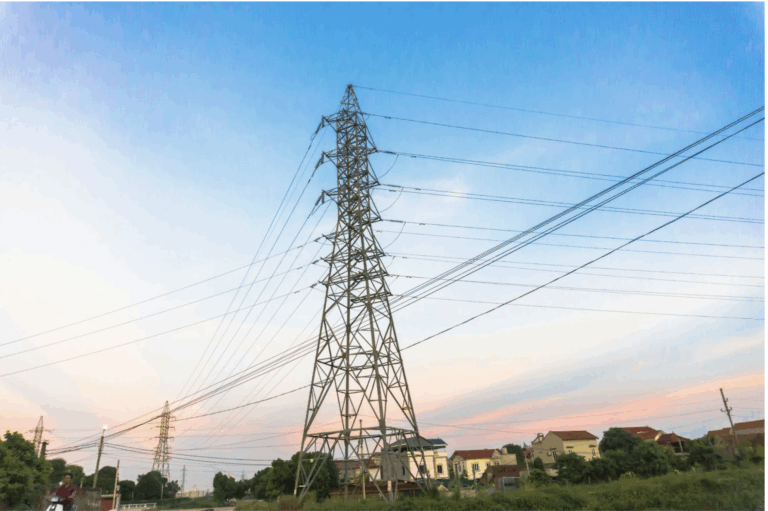
Tower Inspection 2.0: Applying Drone Innovation to Telecom & Communications Towers
Telecom and communications towers form the backbone of modern connectivity. Together, they support everything from streaming a 5G video call to transmitting the signals that guide emergency responders. That makes for infrastructure at a massive scale: In cellular alone, the U.S. had more than 140,000 cell towers and over 450,000 outdoor small cell nodes in 2022, and that network continues to expand with rapid 5G deployment.
Telecom operators have long relied on disciplined inspection programs to protect service quality and revenue. But state Departments of Transportation (DOTs) now oversee a rising portfolio of towers that carry intelligent transportation systems, broadband projects, and emergency communications — assets where failure directly impacts public safety.
For both players, this means that the standards for tower maintenance are a moving target. In this guide, we’ll explore best practices for inspecting both telecom and DOT-owned communications towers, and how drone-enabled inspections, advanced photogrammetry, and AI-powered defect detection are transforming the way asset managers safeguard these critical structures.
The Importance (And Risk) of Regular Tower Inspections
Communication towers are as high risk as they are high value, and regular inspections are the only way to keep them safe, reliable, and compliant. These structures face constant exposure to the elements, which accelerates corrosion and structural fatigue. When inspections are delayed, small issues like loose bolts or hairline cracks can turn into structural failures or falling components that endanger workers and the public.
Beyond safety, tower maintenance is critical for service continuity. For telecoms, outages mean dropped calls, disrupted data coverage, and costly customer churn. DOTs face even higher stakes: Roadside communication towers often carry Intelligent Transportation Systems (ITS), broadband relays, or emergency communications. Downtime in these networks can delay traffic alerts, disrupt 911 signals, or compromise first responder communications, putting public safety on the line.
Finally, there’s the regulatory layer, which exists to keep towers safe for aviation and the surrounding public. Telecom towers must comply with Federal Communications Commission (FCC) regulations under 47 CFR Part 17, which require proper lighting, marking, and ongoing inspection or automated monitoring of light systems in coordination with the Federal Aviation Administration (FAA). DOT-owned communications towers, meanwhile, fall under state infrastructure and safety mandates, with guidance from the Federal Highway Administration (FHWA) on maintaining roadside and Intelligent Transportation Systems (ITS) assets.
Together, these safety, service, and regulatory pressures make regular tower inspections indispensable for protecting people and critical infrastructure.
Common Challenges in Tower Inspections
Inspecting telecom and communications towers has never been a simple process. Difficult access, worker safety risks, and the high costs of traditional inspection methods all make these assets challenging to maintain.
Worker safety is the most pressing concern. Tower climbing — long dubbed “the most dangerous job in the U.S.” — has a fatality rate roughly 10 times higher than construction work. Occupational Safety and Health Administration (OSHA) incident records confirm multiple fatal falls on communication towers in 2023 and 2024. The goal should be to reduce and even eliminate these treacherous manual inspections.
Cost is another concern with manual processes. Traditional manual telecommunications tower inspections typically require specialized crews, trucks, and climbing gear, which often run around $4,000 per tower. These site visits can take half a day or longer, straining maintenance budgets while limiting how many towers can be inspected on schedule.
Even when inspections are completed, subtle defects often go unseen. Visual checks may overlook small cracks, corrosion beginning beneath surface coatings, or slight antenna misalignments that can compromise performance. Without high-quality imagery and historical records, problems can stay hidden until they suddenly become outages and expensive repairs.
Finally, inspection conditions vary by tower type. Telecommunications towers are often clustered in urban or suburban areas with easier access, while DOT-owned communication towers are frequently spread along highways or in remote areas. That means additional permitting challenges, safety hazards near active traffic, and logistical constraints for crews — all of which drive up time and expense.
Best Practices for Telecom and Communication Tower Inspections
With such costly, labor-intensive inspections, inspection teams must take a disciplined, proactive approach to tower maintenance. Whether managing large networks of telecom towers or DOT-owned communications assets, a few foundational steps help ensure safety, reliability, and cost efficiency:
- Establish a consistent inspection schedule: Routine inspections should occur annually, with additional checks after major weather events. Wear will go undetected much less often with consistent inspections, and asset managers will have more reliable benchmarks for comparison.
- Use standardized defect checklists: Relying on uniform criteria, such as rust, loose bolts, or compromised cabling, helps ensure that no detail is overlooked. For DOT-owned towers, checklists should also account for weatherproofing, redundancy, and ensuring public safety communications remain operational during emergencies.
- Combine visual and structural assessments: Surface inspections alone are not enough. Visual reviews should be paired with structural checks, including load-bearing analysis and antenna alignment, to confirm each tower’s overall stability.
- Expand the scope of inspections: Beyond structural components, best practices call for examining cabling, grounding systems, lighting, and corrosion-prone areas. In telecom, this prevents service disruptions; for DOT towers, it keeps critical ITS equipment and emergency networks online.
- Document findings for historical asset records: Every inspection should feed into a digital asset record. Over time, these records create a lifecycle history that enables year-over-year comparisons and predictive planning by utilizing change-over-time visualization technology.
- Plan for preventive maintenance: Reactive fixes are costly and disruptive. Prioritize preventive maintenance to extend tower life, support regulatory compliance, and keep critical communications uninterrupted.
The Role of Drone Technology
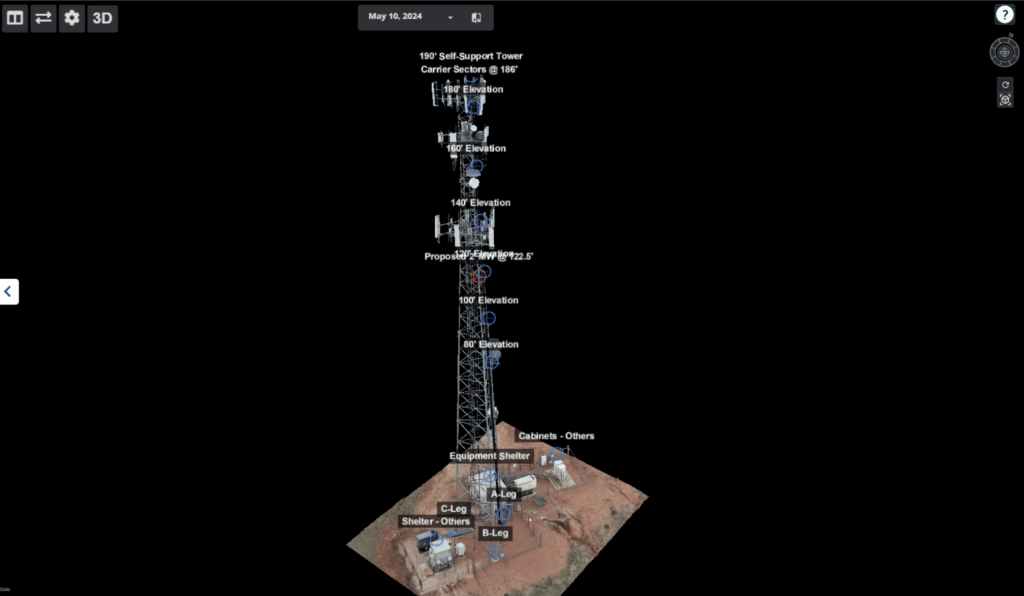
Modern technologies are already changing how crews put those best practices into action — with drones at the forefront. A telecom tower drone inspection offers non-invasive, safe access to both telecom and DOT-owned communications towers, with little to no need for risky climbs or costly equipment setups. Inspections that once consumed half a day now take only a few minutes, and teams get richer data while keeping workers safe on the ground.
Safety improvements are immediate. By reducing reliance on climbers, drone tower inspections minimize exposure in a highly dangerous profession. Along highways, drones also limit the need for extended lane closures or roadside work zones, enhancing safety for DOT workers and the general public.
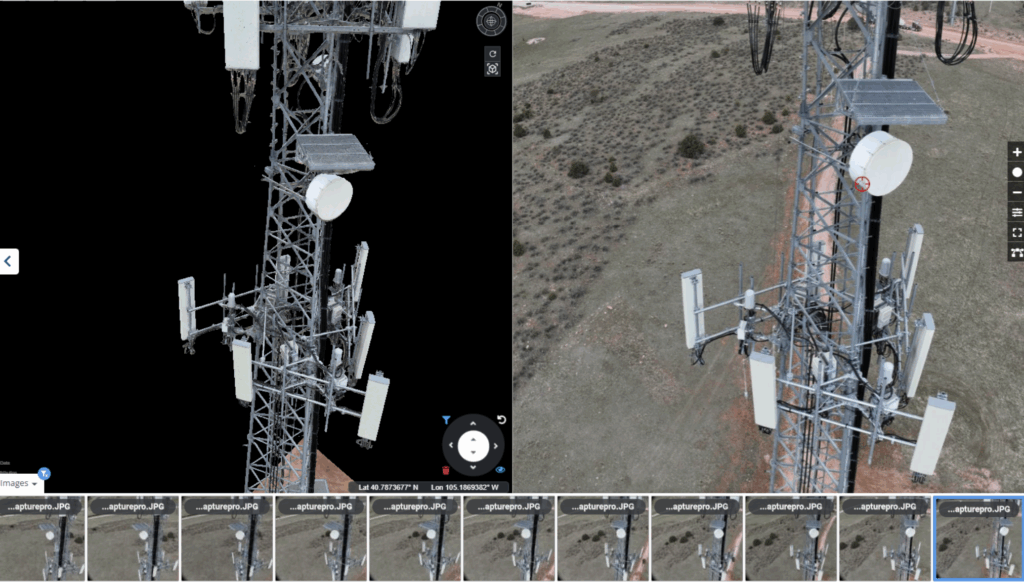
Data precision is another advantage. Communication and cell tower inspection drones go well beyond the capabilities of the naked eye or paper-based records. Standard RGB imagery reveals cracks, rust, or loose components. Thermal sensors identify overheating equipment before it fails. Photogrammetry and LiDAR capture centimeter-level detail, enabling engineers to generate accurate digital twins of towers for ongoing monitoring.
Layered on top of these data streams is AI-powered analysis. Platforms like gNext can quickly analyze this data to automatically flag tower defects such as corrosion, misalignments, or hairline fractures. That means engineers can skip the burdensome manual task of reviewing thousands of images and immediately zero in on the most urgent maintenance issues.
Consider a common scenario, where a DOT inspection team needs to evaluate three roadside communication towers after a severe storm. Traditionally, this would require scheduling multiple climbing crews, bringing in bucket trucks, and shutting down traffic lanes for much of the day.
With drone tower inspection, a two-person team can complete all three assessments in a single morning. High-resolution RGB images highlight surface corrosion, thermal sensors flag an overheating transmitter, and photogrammetry produces a 3D model to document storm-related shifts in alignment. Within hours, AI analysis automatically prioritizes the findings into actionable maintenance tasks. The DOT comes away with a safer inspection process — and a detailed digital record to guide future upkeep.
Related: For DOTs, communication towers are just one piece of the infrastructure puzzle. See how drones and AI are improving inspections across bridges, roads, and other critical assets in our sector-by-sector overview.
Cost and Efficiency Gains for Telecom and DOT Tower Inspections
Traditional tower inspections are highly resource-intensive. Besides the standard costs of around $4,000 per tower, DOTs often have to deal with the additional expenses from lane closures, traffic control, and working in remote locations. Telecom operators face similar burdens across large networks, where inspection expenses quickly multiply into the millions.
The typical drone cell tower inspection cost is up to 50% lower than traditional methods, thanks to reduced labor and equipment needs. Drones can complete telecom tower inspections in under an hour, compared to six to eight hours for manual teams. And for DOT-owned roadside towers, drones also cut indirect costs by minimizing lane closures and traffic disruptions — savings that add up quickly across large networks.
Once images are captured, though, the real bottleneck in traditional processes is analysis. Reviewing thousands of photos can take engineers hours, but AI-powered drone asset inspection platforms like gNext can automate defect detection and prioritize problem areas in minutes. This enables faster decisions, reduces maintenance backlogs, and ensures high-risk issues are addressed first.
Over the long term, these gains translate into real ROI. A proactive repair, such as treating early corrosion for $500, can prevent a $20,000 structural replacement. By catching issues earlier and extending asset lifespans, cell tower drone inspections lower immediate costs and make budgets more predictable for both telecom operators and DOTs.
Recommendations for Preventive Tower Maintenance and Upkeep
Ultimately, inspections only add value when their findings translate into action. To get the most from both traditional and drone-enabled tower inspections, operators should establish a proactive communication tower maintenance framework that extends asset life and minimizes costly disruptions.
Here are a few recommendations to make the most of your tower inspection and maintenance plan:
- Create an integrated asset management plan: Centralize tower inspection, repair, and maintenance data in one system of record. This keeps repair histories accessible across teams rather than siloed in spreadsheets or paper reports.
- Use inspection data for lifecycle planning: Tie findings into asset management platforms to prioritize budgets and upgrades. DOTs, for instance, can integrate their data into AASHTOWare for more proactive planning and cell tower maintenance.
- Focus on preventive, not corrective, maintenance: The difference between tightening a corroding bolt during a scheduled check and replacing a compromised tower section after failure is measured not just in dollars but in downtime and safety risk. Address problems proactively to limit expensive emergency repairs.
- Adopt digital twins for continuous monitoring: Build 3D tower models to compare subtle changes — like a leaning structure, sagging cabling, or gradual corrosion — year-over-year and detect early deterioration.
- Plan for lifecycle budgeting and upgrades: Use inspection insights to forecast replacement timelines and align these with 5G or broadband rollouts. This will help minimize the cost of upgrades that have to happen anyway.
Together, these practices shift tower management from reactive fixes to proactive planning. By combining disciplined maintenance routines with data-driven insights, both telecom operators and DOTs can extend asset life, control costs, and ensure that critical communication networks remain reliable well into the future.
Modernizing Telecom and DOT Tower Inspections
Whether you’re maintaining telecom towers for nationwide coverage or DOT communications towers that safeguard public safety, inspections are non-negotiable. Telecom operators and DOTs share priorities around uptime, safety, and cost efficiency for maintaining this essential infrastructure — yet costs and logistics present serious roadblocks to achieving these goals.
Drone-enabled inspections, paired with photogrammetry and AI defect detection, deliver the accuracy and speed needed to stretch budgets while keeping risks at bay. For DOTs especially, these tools provide a way to manage expanding tower networks with telecom-grade rigor. And with FAA regulations evolving to allow operations beyond the visual line of sight, the opportunity to enhance inspections with drone data will only grow.
Ready to see it in action? Learn how gNext can modernize your tower inspection workflows.