

Metrics That Matter: Measuring ROI Beyond Time Savings for Asset Owners
From public works to private facilities, asset owners of all kinds are beginning to see the value of drone-powered inspections. Yet, many still hesitate to make the investment because their assessment of that value stops short of the full picture. They look at just one piece of the ROI puzzle: time.
Time savings are the easiest metric to measure, which is why they’ve become the default yardstick for ROI. They’re tangible, repeatable, and make for a great headline. But focusing solely on hours saved risks oversimplifying the broader business case for modern inspection technology.
The true return lies in what that saved time enables: more accurate data, fewer repeat site visits, and better decisions that extend asset life and reduce risk. As agencies mature in their use of drones and AI, ROI metrics for asset owners must expand beyond speed to capture the quality, consistency, and confidence that make every inspection more valuable.
Accuracy as the Foundation
Time savings are a flashy focal point for asset inspection ROI. But faster inspections that sacrifice precision don’t deliver value — they create risk. If inspection data can’t be trusted, every downstream decision becomes guesswork.
Accuracy, not speed, is the true foundation of modern asset management.
Having dependable, high-fidelity data builds confidence in long-term asset planning. When inspection results are repeatable across teams, budgets, and years, forecasting and rehabilitation schedules become smarter and more defensible.
The Federal Highway Administration’s drone bridge inspection study proved just how far the technology has advanced in this category, with drone-captured video detecting cracks as small as 0.004 inches. Such precision is extremely difficult to achieve consistently at scale, especially over hundreds of assets and limited access points. Automated imaging and AI analysis ensure a high level of detail is captured consistently, every time, and without fatigue or subjective interpretation.
In multiple sectors — from civil to industrial inspections — AI-augmented inspection systems have been shown to reduce inter-operator variability and deliver more repeatable, reliable results. Even in low-light or hard-to-reach areas, platforms like Skydio capture more accurate imagery than even the best-trained human inspector..
That’s why gNext emphasizes accuracy in inspections as the bedrock of ROl. Efficiency gains only matter if the data behind them can stand up to scrutiny.
Defect Detection: A Domino Effect
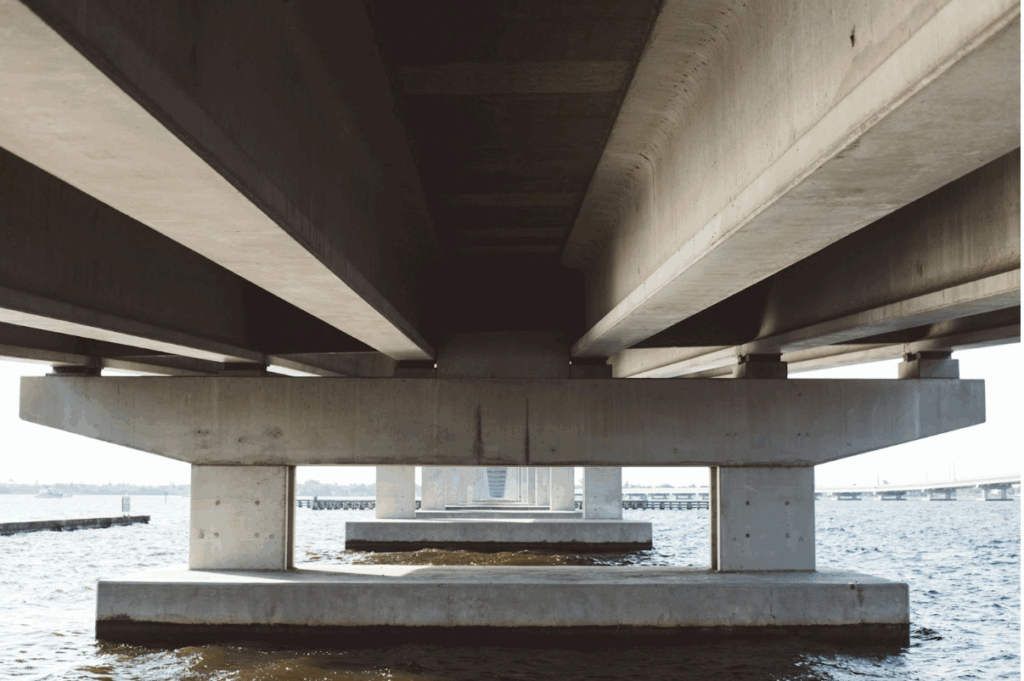
For DOTs, utilities, and other asset owners, the implications of under-detection are too serious to accept “close enough.” One missed crack, corrosion spot, or delamination can snowball into a severe failure. Structural vulnerabilities translate into safety liabilities, unplanned outages, and emergency repairs. Even a single incident can dwarf an agency’s entire annual inspection budget.
Drone imagery and AI shift the entire approach from reactive to predictive — from sample-based checks to comprehensive, repeatable surveillance. High-resolution images, 3D models, and digital twins let you monitor subtle changes over time, localize defects precisely, and prioritize action well before a small flaw starts to grow. In effect, you turn inspection from a static snapshot into a living dataset that guides decision-making.
CSX’s autonomous drone program, for instance, has identified defects as small as one-eighth of an inch from 100 feet away. And in field deployments pairing drones with AI analysis, gNext customers have seen their defect detection rate increase by 20–30% over manual methods. Such gains create a cascade of benefits, from reducing worker risk and strengthening maintenance decisions to safeguarding infrastructure for the long term.
Rework Reduction and Cost Avoidance
Every extra site visit carries a cost. Mobilizing crews means more labor hours, vehicle miles, permits, and safety controls. Rework also ripples out into project delays, schedule risk, and erosion of stakeholder confidence. For large asset portfolios, even modest inefficiencies can translate into six- or seven-figure losses each year.
Drone and AI-powered inspection platforms help cut those costs at the source. With high-fidelity data in hand from the very first visit, teams need fewer follow-up trips and clarifications. A bridge inspection that once required three separate visits for baseline imaging, close-ups, and confirmations might now be completed in one or two. That would translate into a 30–65% reduction in site visits, resulting in lower field costs, less downtime, and fewer emissions from truck rolls.
The data bear this out. The Wisconsin DOT’s 2024 AI Applications in Transportation report found that AI and digital twin deployments can substantially reduce the need for repeat site visits. The study estimated that data capture and processing for a single site cost under $5,000, while upfront technology investments quickly paid off through reduced mobilization and better decision-making.
Across gNext deployments, asset owners have reported up to 60% lower inspection costs, thanks to better data capture and smoother cross-team collaboration. What’s more, these efficiencies accelerate maintenance cycles and free up resources for higher-value work. When fewer steps stand between inspection and action, everyone — from engineers to executives — sees measurable ROI.
Compliance and Accountability Metrics

Infrastructure inspection performance can’t be judged solely by internal benchmarks. External standards and regulations are constantly evolving to demand stricter scrutiny and more detailed compliance metrics.
Bridge owners, for instance, must keep up with federal rules like the National Bridge Inspection Standards (NBIS) and the newer Specifications for the National Bridge Inventory (SNBI). Together, these regulations set the baseline for how inspection data must be collected, structured, and submitted.
Under the SNBI framework, asset owners must now report up to 154 distinct data items, including granular condition ratings for decks, superstructures, and substructures, as well as new elements such as scour vulnerability and plans of action. The schema also requires validated, structured data submissions to ensure every field — from geometry to defect severity — passes automated consistency checks.
That level of traceability transforms compliance from a paper exercise into a data discipline. Platforms like gNext simplify this, automatically generating audit-ready records that conform to SNBI and other regulatory requirements. Each inspection is time-stamped, geo-tagged, and versioned, creating a defensible chain of evidence that can withstand audits or legal review. The result is reduced risk and a higher standard of inspection integrity.
Building a Broader ROI Framework
True asset inspection ROI in infrastructure inspection isn’t a single metric. It’s an ecosystem of performance indicators that together reveal efficiency, quality, and risk. Time savings matter, but only alongside accuracy, detection rates, and compliance consistency. Each improvement strengthens the next, culminating in measurable risk mitigation — the ultimate ROI metric for asset owners.
| Metric Category | KPI | Example | Why It Matters |
| Time & Efficiency | Hours saved, % faster inspection | Compare before vs. with platform | Demonstrates operational leverage |
| Data Accuracy & Consistency | Inter-operator variance, error rate | Standard deviation across inspectors; defect misclassification rate | Confidence in data, trend reliability |
| Defect Detection | Recall, precision, defect detection rate uplift | Percent more defects found vs. baseline | Captures value of detection improvement |
| Rework & Revisits | Number of revisits, cost of revisions | % reduction in site returns or re-inspections | Direct cost savings |
| Compliance & Audit Metrics | % inspection records audit-ready, missing-field rate | Fraction of inspections with full documentation | Reduces oversight/penalty risk |
| Risk Mitigation (Flows From All of the Above) | Estimated avoided failure cost (via detection), liability exposure reduced | Expected cost of avoided incidents | Ties data to financial risk |
You don’t have to jump from a single metric to a full-blown ROI analysis. Start small, piloting two or three measurable metrics like defect detection rate uplift or revisit reduction, before scaling to full dashboards.
Some metrics, particularly those related to risk mitigation, require probabilistic modeling and executive buy-in to implement effectively.
Redefining ROI for the Future of Asset Management
Time savings will always be the entry point for evaluating infrastructure inspection performance. It’s the first and most tangible proof that new inspection technology works, but it’s only the beginning. The true ROI of drone and AI-enabled inspections lives in risk reduction, data confidence, fewer revisits, and compliance assurance. These are the outcomes that protect infrastructure budgets, strengthen public trust, and extend asset life far beyond the next reporting cycle.
As you evaluate new inspection technology, ask not merely, “Did this tool pay for itself in saved hours?” but, “Did it help us make better decisions? Did it reduce safety and performance risk? Did it extend the lifespan of the assets we manage?”
Those are the ROI metrics that define lasting value for asset owners.
To learn more about how the gNext platform makes asset management easier, more efficient, and more predictable, book a quick demo here to see the platform in action!


